
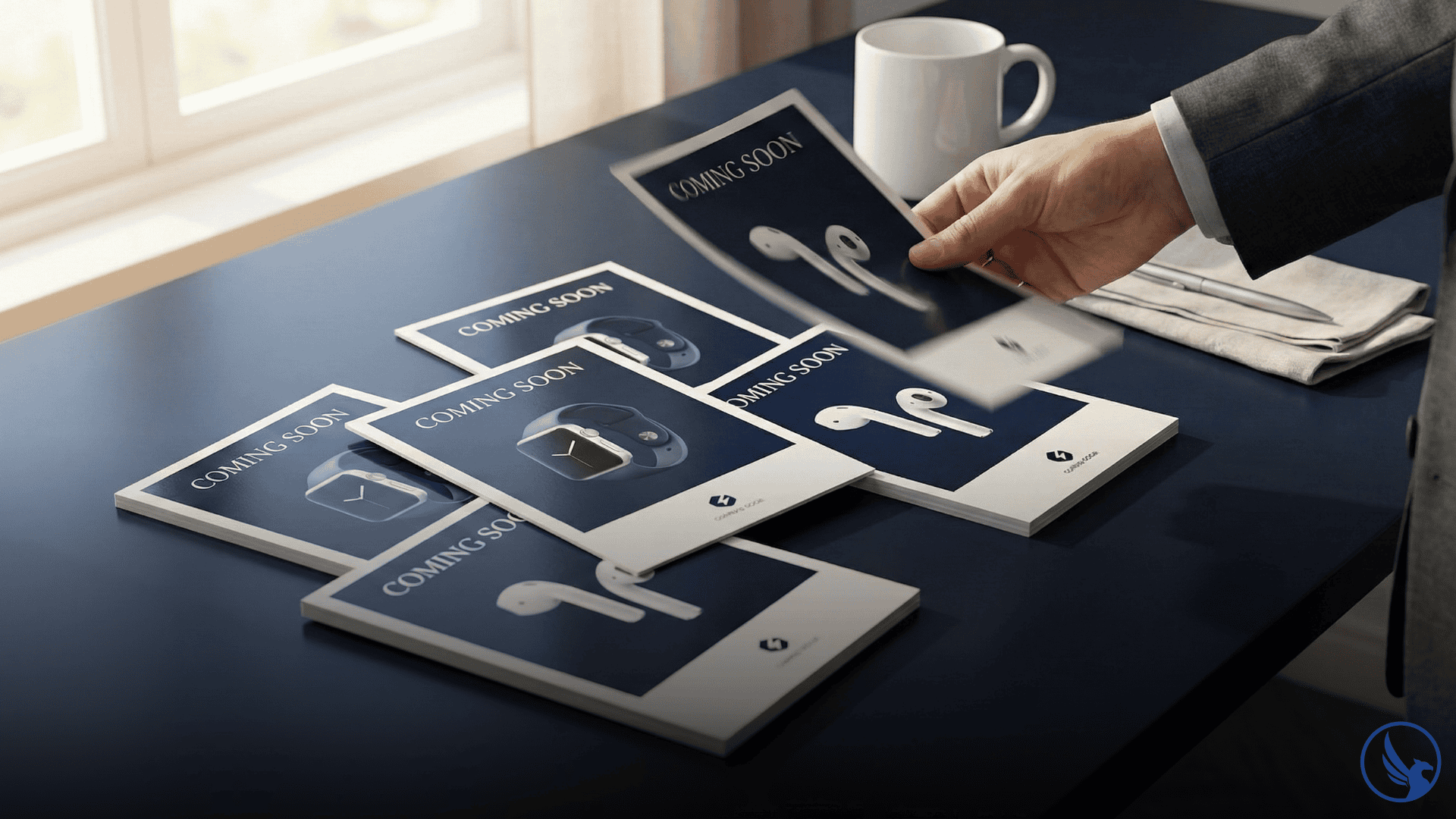
Postcard printing for product launches creates anticipation that digital announcements can’t match. Every brand launching something new faces the same challenge: cutting through noise. Email blasts get buried. Social posts vanish in feeds. Paid ads compete with thousands of other messages. But a well-designed postcard lands in someone’s hands and stays there—on a desk, pinned to a board, stuck to a refrigerator. In 2026, the brands generating real launch momentum aren’t relying solely on digital. They’re using direct mail to create physical touchpoints that stick. Here are three case studies showing how it works.
Product Launch Postcard ROI
Real Campaign Performance Data • 2025-2026
Response Rate Comparison
Average Campaign Results
Why Postcard Printing for Product Launches Works
Product launches live or die on attention. You have a narrow window to generate awareness, build anticipation, and drive first purchases. Digital channels are crowded and expensive. Industry estimates suggest the average person sees thousands of ads daily. Most register for milliseconds before disappearing.
Direct mail operates differently.
According to the ANA (formerly DMA), direct mail achieves response rates between 4.9% for prospect lists and 9%+ for house lists—significantly higher than email marketing’s typical 0.6-1.2% response rates. For deeper analysis of these metrics, see our breakdown of postcard printing response rate statistics. For product launches specifically, physical mail creates a sensory experience that digital cannot replicate: the weight of quality cardstock, the texture of a coating, the surprise of something arriving unexpectedly.
Postcard printing for product launches also solves a targeting problem. Digital ads guess at intent based on browsing behavior. A mailed postcard reaches an exact list—existing customers, qualified prospects, industry contacts—with precision that programmatic advertising can’t match.
The brands winning launches in 2026 understand that physical and digital aren’t competing channels. They’re complementary. Direct mail creates the memorable moment. Digital captures the conversion.
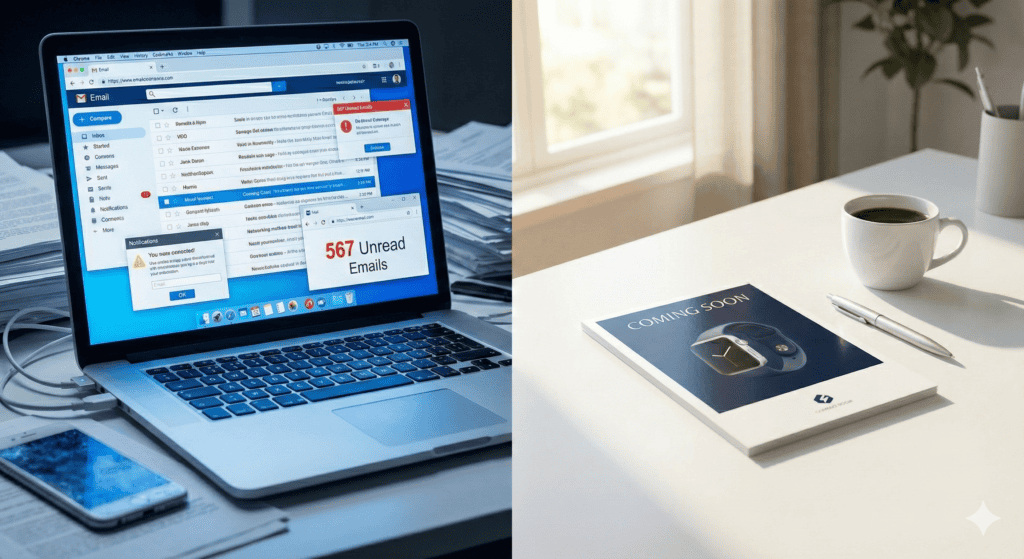
Case Study 1: DTC Skincare Brand Pre-Launch Campaign
A representative example based on direct-to-consumer product launch patterns: A skincare company prepared to launch a new vitamin C serum. They had 12,000 email subscribers and an engaged Instagram following, but previous launches had underperformed. Email open rates averaged 22%. Conversion rates from social averaged 1.2%.
They tested postcard printing for product launches as a pre-launch strategy.
The campaign:
- Audience: 3,500 highest-engagement email subscribers
- Postcard: 6×9, soft-touch matte finish, minimalist design
- Front: Product image with “Something New Is Coming” headline
- Back: Launch date, early-access QR code, $10 launch discount
- Timing: Mailed to arrive 5 days before public launch
Results:
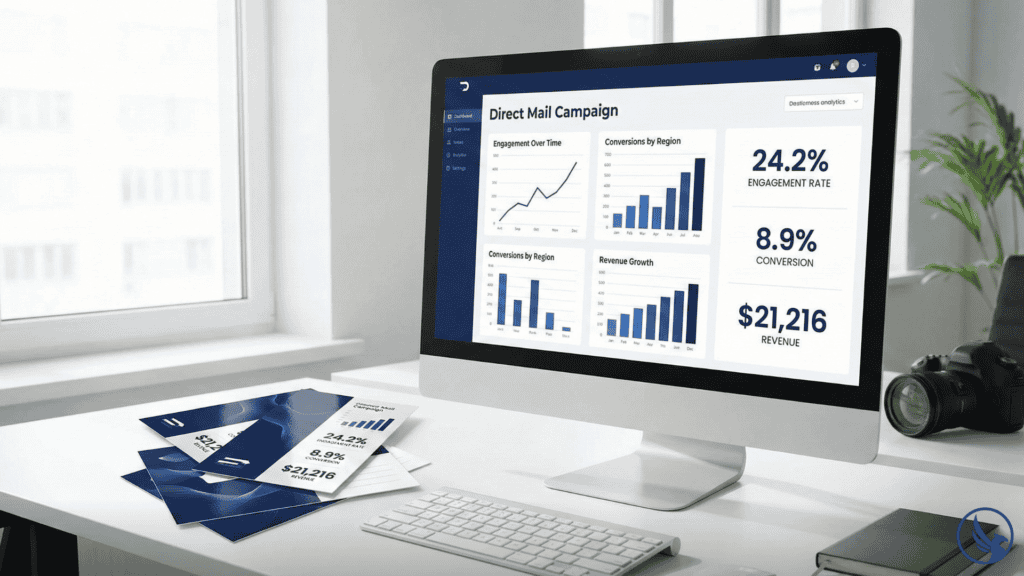
- QR code scans: 847 (24.2% engagement rate)
- Pre-launch purchases: 312 (8.9% conversion)
- Average order value: $68 (vs. $52 typical)
- Revenue from postcard recipients: $21,216
The physical card created anticipation that email couldn’t match. Recipients who received the postcard converted at 7x the rate of email-only subscribers during the same launch window.
The founder’s takeaway: “The postcard made people feel like insiders. Email feels like everyone gets it. A physical card feels exclusive.”
For sizing and format guidance, see our guide to best postcard size for direct mail.
Read the complete guide: Postcard Printing and Mailing Services Guide
Case Study 2: B2B SaaS Feature Announcement
A representative example based on B2B software launch patterns: A project management software company launched a major new feature: AI-powered task prioritization. Their typical approach—email sequences and LinkedIn ads—had produced diminishing returns. Open rates on product announcement emails had dropped below 15%.
They tested postcard printing for product launches targeting their highest-value accounts.
The campaign:
- Audience: 500 enterprise account decision-makers
- Postcard: 6×11 oversized, UV coating, bold typography
- Front: “Your To-Do List Just Got Smarter” with product screenshot
- Back: Feature summary, personalized demo booking link via QR code
- Timing: Mailed to coincide with email announcement
Results:
- Demo requests from postcard recipients: 47 (9.4% response)
- Demo requests from email-only recipients: 12 (1.8% response)
- Closed deals attributed to postcard campaign: 8
- Average contract value: $24,000
- Revenue generated: $192,000
- Campaign cost: $1,850
The postcard outperformed email by 5x on response rate. More importantly, it reached decision-makers who had stopped opening product emails entirely. Physical mail bypassed inbox fatigue. Understanding postcard printing ROI for local businesses helps frame these economics for any scale.
The marketing director’s observation: “These are people who get 200 emails a day. A postcard sits on their desk until they deal with it.”
See case study results comparison on Pinterest
Case Study 3: Local Retailer Grand Opening
A representative example based on retail grand opening patterns: A specialty coffee roaster opened a second location in a neighboring town. They had no existing customer base in the new area. Digital ads were expensive and poorly targeted—the zip code was too small for efficient Meta targeting.
They used postcard printing for grand openings via EDDM® (Every Door Direct Mail®).
The campaign:
- Audience: 8,000 households within 2-mile radius of new location
- Postcard: 6.5×9, full bleed photography of signature drinks
- Front: “Your New Neighborhood Coffee Shop Opens March 15”
- Back: Map, hours, grand opening special (free pastry with any drink)
- Timing: Mailed to arrive 3 days before opening
Results:
- Grand opening weekend traffic: 640 customers
- Offer redemptions tracked via unique code: 287 (3.6% response rate)
- Customers who returned within 30 days: 124 (43% of redeemers)
- Email list sign-ups from new customers: 189
The campaign cost $3,600-$4,000 including design, printing, and EDDM® postage (8,000 pieces × $0.45-$0.50 delivered cost). Revenue during grand opening weekend exceeded $8,400. More critically, the campaign built a customer base from scratch in a market where the brand had zero awareness.
The owner’s assessment: “We couldn’t have bought that foot traffic with Instagram ads. The postcard put us on the map—literally.”
For detailed EDDM® pricing and implementation, see EDDM postcard printing costs. The USPS® EDDM® program makes geographic targeting accessible to businesses of any size. For related strategies, explore postcard printing for grand openings and postcard printing for restaurants.
What These Case Studies Reveal
Three different industries. Three different objectives. One consistent pattern: postcard printing for product launches outperformed digital-only approaches on response rate, engagement, and revenue.
The common elements:
Targeted lists beat spray-and-pray. Each campaign reached a specific audience—high-value subscribers, enterprise decision-makers, geographic radius—rather than broadcasting to everyone.
Physical creates memorability. Digital ads vanish. Postcards persist. The USPS-funded Temple University neuromarketing study demonstrated that tangible marketing materials create stronger brand recall than digital-only campaigns. The tactile experience creates mental stickiness that impressions alone cannot.
Timing amplifies impact. Each campaign timed delivery to coincide with or precede the launch moment, building anticipation rather than announcing after the fact.
Tracking enables optimization. QR codes, unique URLs, and offer codes allowed each brand to measure postcard performance precisely—not guess. For comprehensive tracking approaches, see direct mail postcard tracking methods.
Design quality matters. Professional design on premium stock commands attention and builds credibility. Avoid common postcard design mistakes that undermine campaign performance.
Start Your Product Launch Postcard Campaign
Postcard printing for product launches isn’t about abandoning digital. It’s about adding a physical layer that cuts through noise and creates memorable moments.
The brands winning launches in 2026 aren’t choosing between channels. They’re combining them—using direct mail to build anticipation and digital to capture conversion. Whether you’re launching a new product line, announcing a major feature, or opening a new location, USPS® regulations make it easier than ever to reach targeted audiences with physical mail.
Your next launch deserves more than another email blast. Give it something people can hold. Request a custom quote to see how professional postcard printing can transform your launch strategy—from design consultation to mailing list targeting to delivery tracking. For budget planning, review how much does postcard printing cost for your specific needs.
Read the complete guide: Postcard Printing and Mailing Services Guide