
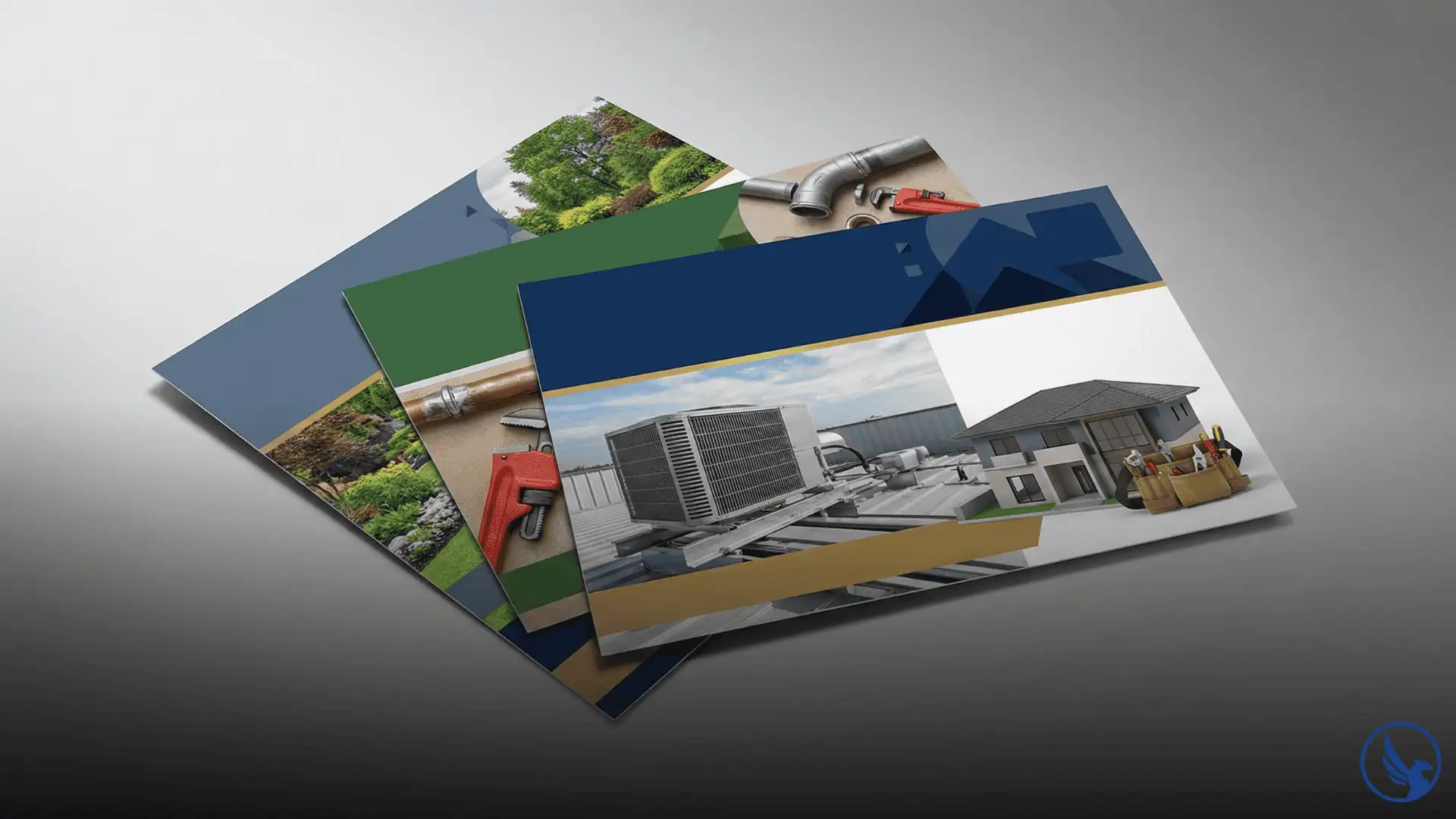
EDDM for home services is one of the most cost-effective lead generation strategies available to local contractors — and it’s still dramatically underused. While HVAC companies, plumbers, and roofers pour budget into pay-per-click ads competing against national platforms, a well-executed Every Door Direct Mail campaign can put a physical, branded piece into every mailbox in a target neighborhood for pennies per household.
If you’ve been relying entirely on digital channels, this guide is worth reading. Furthermore, if you’ve tried direct mail before without great results, the issue is almost certainly targeting, timing, or design — all of which are fixable. For the complete program foundation, see the EDDM Guide at CRST before building your first campaign.
- ›Larger job ticket = larger postcard (roofing → 9×12, plumbing special → 6.5×9)
- ›Front: one strong before/after visual + biggest offer in largest type
- ›Back: license #, insurance, years in business, review snippet, QR to Google reviews
- ›Dedicated phone number per mailing for accurate call tracking
Why EDDM Works Exceptionally Well for Home Services
The Geography Advantage
Home services businesses — HVAC, plumbing, roofing, landscaping, pest control — are inherently geographic. Your service area has hard boundaries. You don’t want leads from three counties away; you want calls from homeowners within your drive radius.
EDDM is built exactly for this. The USPS EDDM route selection tool lets you target mail carriers’ routes by ZIP code, neighborhood, or radius. You can isolate routes based on household income, average age, and whether addresses are residential or business — meaning a roofing company can target routes with older homes (higher probability of needing a new roof) while an HVAC company targets higher-income areas where system upgrades are common.
This level of geographic precision is difficult to replicate with digital advertising, where you’re bidding against national brands with larger budgets. With EDDM mailing routes, your local knowledge becomes a competitive advantage.
Physical Mail Cuts Through Digital Noise
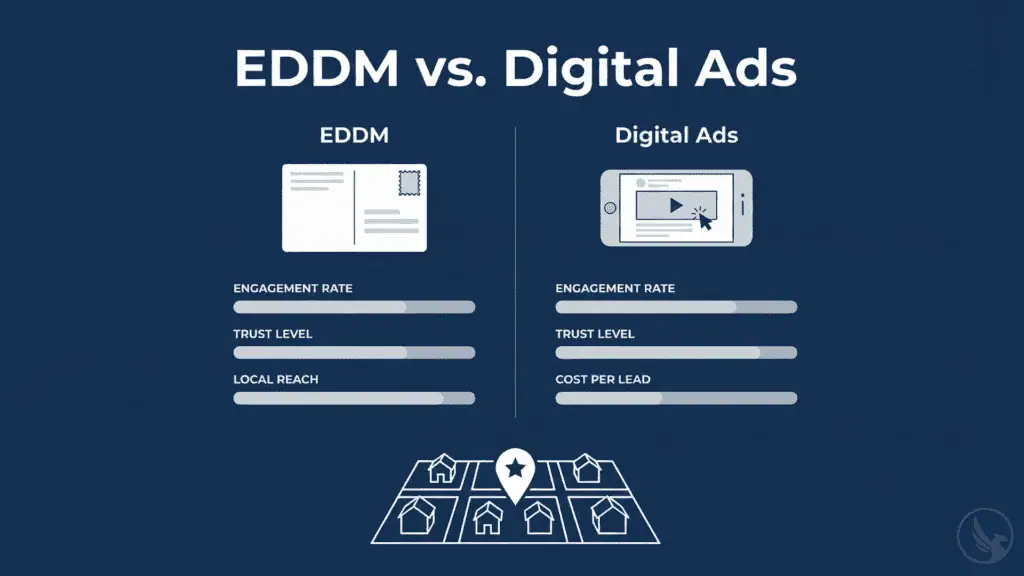
The Data & Marketing Association consistently reports that physical mail achieves higher household engagement rates than digital display advertising. For home services specifically, this makes intuitive sense: homeowners making a decision about a $4,000 HVAC replacement or an emergency plumbing repair are not clicking banner ads. They’re looking for a trusted, local contractor — and a professionally printed postcard in their hand carries a credibility that a display ad simply cannot replicate.
According to the USPS Household Diary Study, 57% of people who receive direct mail feel more valued by the brand that sent it than by brands that only advertise digitally.
Advisory: The 57% figure is drawn from the USPS Household Diary Study. This study is updated periodically and specific figures may have shifted in more recent editions. Verify the current edition at postalpro.usps.com before citing this statistic in client-facing materials.
For home services — an industry where trust and local reputation are the primary purchase drivers — this is significant. Therefore, the question isn’t whether direct mail works for home services. It’s whether your campaign is designed and timed well enough to convert. For a direct comparison of channels, see EDDM vs. Digital Ads.
EDDM Campaign Strategy by Trade
HVAC: Seasonal Timing Is Everything
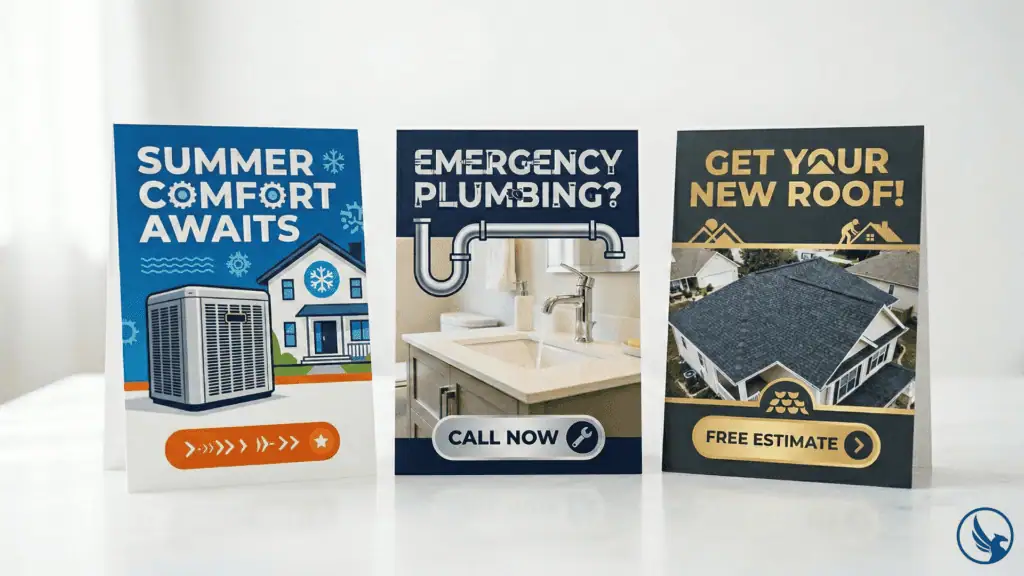
HVAC is one of the highest-ROI use cases for EDDM for home services because demand is highly seasonal and predictable. Spring (March–May) is the prime window for AC tune-up campaigns before summer heat; fall (September–October) is peak season for furnace check and heating system promotions.
The most effective HVAC EDDM campaigns lead with a specific, time-limited offer: “AC Tune-Up — $49 Through May 31” consistently outperforms generic “Call us for all your HVAC needs” messaging. Pair the offer with a clear expiration date, a local phone number (not a call center line), and a QR code linking to an online booking page. You can find timing guidance in the Best Time to Send EDDM breakdown.
Furthermore, because HVAC customers have a high lifetime value — a homeowner who trusts your company for annual tune-ups will likely call you for a full system replacement — your cost-per-acquisition math should account for long-term value, not just the first job booked from the mailer. Use the EDDM ROI Calculator to model those numbers before committing to a campaign budget.
Plumbing: Urgency and Availability as Primary Offers
Plumbing is a different animal. Most plumbing calls are unplanned — a burst pipe, a failed water heater, a slow drain that became a blocked one. Consequently, EDDM for plumbing works best as a brand-building and availability tool rather than a pure promotional vehicle.
The goal is to be the company already on a homeowner’s mind when an emergency happens. A strong plumbing EDDM campaign communicates: fast response time, 24/7 availability, licensed and insured, and local (meaning fast). A secondary offer — water heater inspection, drain cleaning special — gives recipients a low-friction reason to call before an emergency, building the relationship early.
This approach is validated by EDDM response rate data: home services campaigns that include both a brand trust message and a specific offer consistently outperform campaigns that rely on the offer alone.
Roofing: Targeting Triggers and Neighborhood Saturation
Roofing companies have a unique tactical advantage with EDDM. When hail or a major storm hits a neighborhood, every house on those streets is suddenly a potential roofing customer — and the company that hits those mailboxes first is the company that gets the calls.
A rapid-response roofing campaign — mailing to affected routes within 72 hours of a weather event — is one of the most effective uses of EDDM for home services in the industry. You can plan this in advance by having a pre-designed EDDM postcard template ready to drop at your printer with only the storm-specific headline and date updated.
Advisory: The 72-hour post-storm mailing window is widely cited in roofing marketing as a best practice for maximizing response rates. This figure reflects practitioner experience rather than a single published study. Response windows may vary by market, storm severity, and competition. Use it as a directional guideline and track your own campaign response data to calibrate timing for your specific area.
CRST’s production team can turn these around quickly — contact CRST to discuss fast-turnaround options.
Additionally, roofing companies benefit from the “neighbor effect”: when a homeowner sees a work truck from a company they recognize on their street, they’re more likely to respond to that company’s mailer. Saturation mailing the routes immediately surrounding your active job sites reinforces this effect at a very low incremental cost.
Designing EDDM Postcards That Convert for Home Services
What to Put on the Front Panel
Home services postcards compete in a mailbox that also contains bills, catalogs, and other promotional mail. As a result, the front panel has one job: stop the homeowner from moving toward the recycling bin.
The single most effective front-panel strategy is a strong before/after visual combined with a direct offer. For roofing, a clean photo of a finished roof installation. For HVAC, a modern system install or a seasonal graphic. And for plumbing, a clean bathroom remodel or water heater replacement. Pair the visual with your biggest offer in the largest type on the card.
For professional design guidance, see EDDM Postcard Design and EDDM Design Tips — both cover visual hierarchy principles specific to home services audiences.
Back Panel: Trust Signals and Friction Removal
The back panel of a home services EDDM postcard is where trust gets built. Include: your contractor license number, insurance status, years in business, a Google or Yelp review snippet (with attribution), service area neighborhoods by name, and a clear phone number in large type.
Homeowners hiring a contractor — especially for high-ticket jobs like HVAC replacement or a full roof — are conducting trust due diligence. Every trust signal you include on the back panel reduces the perceived risk of calling an unfamiliar company. Furthermore, including a QR code that links directly to your Google review page allows prospects to verify your reputation in seconds.
According to the Nielsen Trust in Advertising report, consumer recommendations and reviews remain among the most trusted forms of brand credibility — making review snippets on your back panel one of the highest-value trust elements you can include.
Advisory: Nielsen’s Trust in Advertising research is updated periodically. The link above reflects the most recently available edition at time of publication. Verify the current edition at nielsen.com before citing specific figures in client-facing materials, as rankings and percentages may have shifted in more recent releases.
For paper stock and finish recommendations that reinforce a professional impression, see EDDM Paper Stock Options.
Size Matters: Go Larger When the Job Ticket Is Bigger
For home services, postcard size should correlate with average job value. A plumber running a $49 drain cleaning special can get away with a 6.5″ × 9″ card. A roofing company presenting a $15,000 roof replacement service should be mailing on 8.5″ × 11″ or 9″ × 12″ stock — the larger format signals the seriousness and quality of the company before a single word is read.
See EDDM Postcard Sizes and EDDM Postcard Printing Cost for a full breakdown of how size affects both impact and budget.
Measuring and Improving Your Home Services EDDM Campaign
Tracking What’s Working
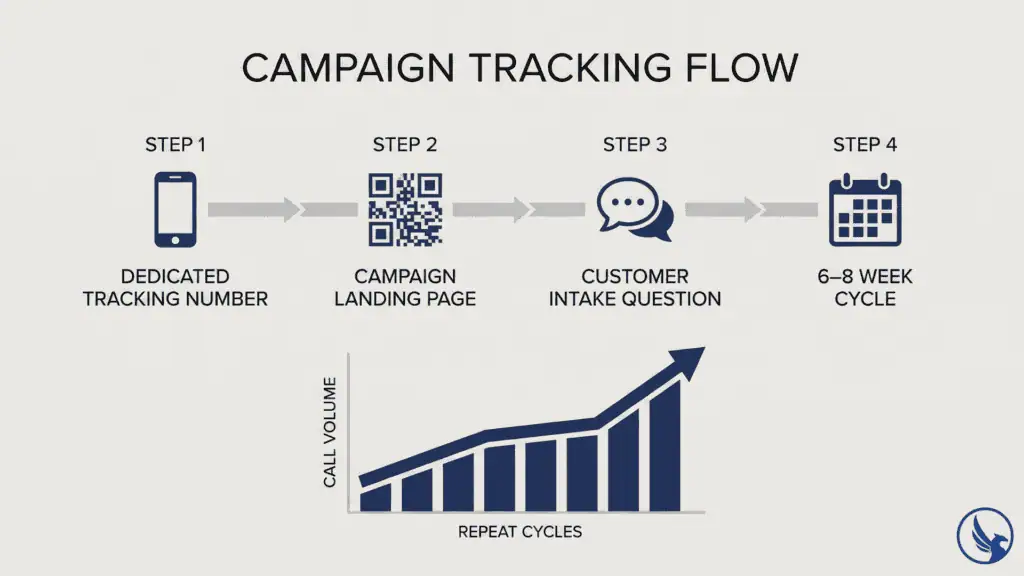
EDDM campaigns don’t come with a built-in analytics dashboard, but that doesn’t mean you can’t measure results. The most reliable tracking methods for home services are dedicated phone numbers (a unique number printed only on the mailer), campaign-specific QR codes linking to a landing page with UTM parameters, and asking every new caller “how did you hear about us?”
Additionally, USPS Informed Delivery can amplify your physical campaign with a digital preview — homeowners see a grayscale scan of your postcard in their email inbox before it arrives. This is free to enable and can significantly increase engagement rates. See EDDM vs. Informed Delivery for setup details. For a full results framework, EDDM Tracking Results is the right resource.
Building a Repeat Campaign Calendar
The home services companies getting the best results from EDDM aren’t running one-off campaigns — they’re mailing the same neighborhoods on a rolling 6–8 week cadence.
Advisory: The 6–8 week repeat mailing cadence reflects widely cited direct mail frequency guidance for local service businesses. This range is a practitioner benchmark, not a figure derived from a single published study. Optimal cadence varies by market size, competition, and campaign budget. Use it as a starting point and adjust based on your own response data across successive drops.
Repetition builds brand recognition, and brand recognition drives call volume when the need arises. Use EDDM Postcard Templates to build a set of seasonal variations in advance so your cadence stays consistent without requiring a redesign before every mailing. For a side-by-side comparison of EDDM against digital advertising ROI, EDDM vs. Digital Ads is worth reading before your next budget planning cycle. For a broader look at how to structure a full campaign, the EDDM First Campaign Guide covers the complete process from targeting through delivery.
Start Your EDDM Campaign with CRST
For HVAC, plumbing, and roofing companies, EDDM for home services offers a proven path to more local leads — combining precise geographic targeting, physical credibility, and scalable campaign economics that digital channels alone can’t match.
CRST handles EDDM printing from file setup through postal delivery, with a team that knows USPS compliance inside out and a track record across industries. Explore our full EDDM printing services to see how we support campaigns from first template to final delivery. Ready to move forward? Request an estimate or contact our team with your project details.
For the complete breakdown of how the program works from start to finish, see our EDDM Guide.